September 11, 2023
There are animals that survive Africa. Then there are animals that argue with Africa - and win.
Enter the honey badger, also known as the ratel (Rah-til). A creature so stubbornly confident that lions reconsider their life choices, snakes regret their decisions, and beehives file restraining orders. This is not a blog about caution, elegance, or restraint. This is a celebration of chaos with claws.
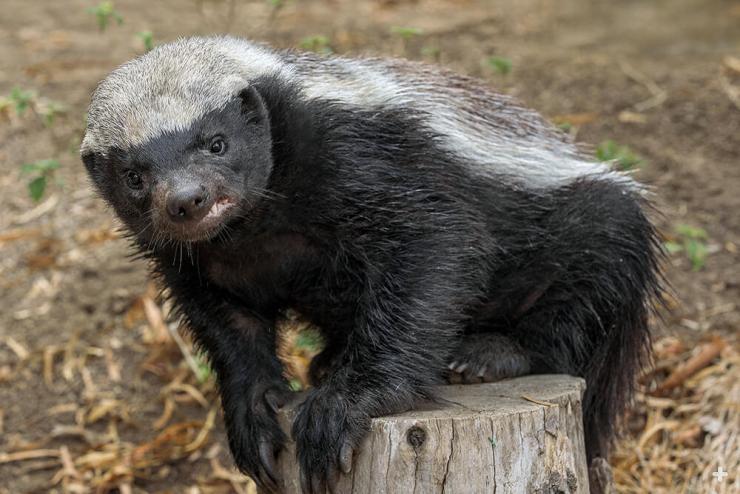
Small body. Industrial-strength attitude.
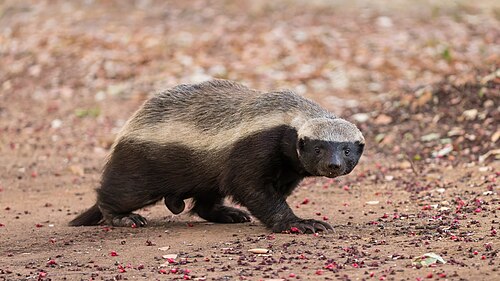
The honey badger (Mellivora capensis) looks like it was designed by someone who said, “What if we gave a tank feelings?” Stocky, low-slung, and wrapped in famously loose skin, this animal is built for one purpose: Survive everything, preferably while being rude about it.
That loose skin is not accidental. It allows honey badgers to twist, turn, and bite attackers even when grabbed. Think of it as nature’s get-out-of-jail-free jacket.
Honey badgers have one of the widest distributions of any African carnivore.
Some of the locations they are found across include, but are not limited to:
Kruger National Park – Known for diverse wildlife and occasional honey badger sightings, particularly on night drives.
Okavango Delta (Botswana) – Remote and rich in biodiversity, offering excellent opportunities for rare sightings.
South Luangwa National Park (Zambia) – Famous for walking safaris and nocturnal wildlife encounters.
Etosha National Park (Namibia) – Open landscapes make spotting elusive species slightly easier.
As well as North Africa, the Middle East and India.
They adapt to deserts, savannahs, forests, and semi-arid regions with equal enthusiasm. If there is food, the honey badger will arrive. If there is danger, the honey badger will arrive faster.
Seeing one on safari is never guaranteed. They are elusive, mostly nocturnal, and allergic to schedules. Which, frankly, makes the sighting even sweeter.
Honey badgers are most often spotted in:
Private reserves
Quiet safari areas with minimal vehicle pressure
Night drives and early morning game viewing
Their appearances are brief, unexpected, and unforgettable. Much like the animal itself.
Honey badgers eat everything, not figuratively, literally.
Their menu includes:
They are famous for raiding beehives with zero concern for stings. Their thick skin and high pain tolerance mean bees are treated as background noise.
There is also documented behaviour of honey badgers surviving snake bites that would end most mammals. They may collapse, nap it off, and continue hunting later, because of course they do.
Honey badgers are not known for sentimentality.
Why Nothing Messes With Them
Honey badgers have been observed:
Scientists attribute this to a mix of intelligence, physical resilience, and an evolutionary strategy best described as “absolute refusal”.
Ask any seasoned guide, and they will have a honey badger story.
One involves a honey badger trotting confidently down a road while a lion follows at a respectful distance, clearly unsure how things went wrong. Another involves a honey badger stealing food from a camp kitchen, leaving only confusion and bruised egos. They do not sneak; they arrive.
Despite their reputation, honey badgers play an important ecological role. They control rodent populations, influence insect numbers, and contribute to balanced ecosystems across their range.
Protecting habitats protects not just the iconic species, but also the smaller, tougher characters holding the system together.
Many of the landscapes honey badgers rely on are under pressure from habitat loss and human expansion.
Through the Indigo Earth Foundation, Indigo Safaris supports conservation initiatives focused on habitat protection, education, and long-term sustainability across Africa.
Supporting conservation means protecting the entire cast, including the ones with attitude.
Why the Honey Badger Is the Most Fearless Animal
Let’s address the headline question: why is the honey badger considered the most fearless animal?
It’s not hype, it’s behaviour. Honey badgers routinely take on animals much larger than themselves. We’re talking venomous snakes, jackals, and even big predators. Not because they have to, but because they can.
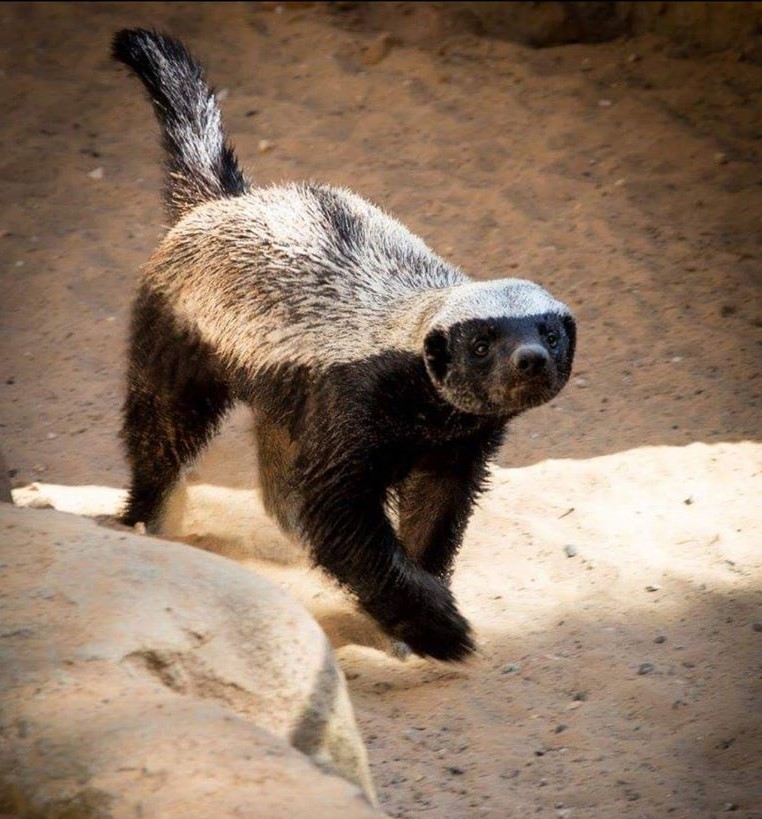
The honey badger’s skin is loose and incredibly tough. This allows it to twist, turn, and fight back even when grabbed by a predator. Think of it as built-in armour with a side of flexibility.
Venomous snake bite? Unpleasant, sure. But often not fatal. Honey badgers have been observed surviving bites that would incapacitate other animals, only to wake up later and carry on as if nothing happened.
This is where things get interesting. The honey badger doesn’t bluff. It commits. When it decides to engage, it does so with a level of persistence that makes even seasoned predators reconsider their life choices.
Fearlessness without brains is just chaos. Fortunately, the honey badger brings both. They have been observed using tools, escaping enclosures, and solving problems in ways that suggest a surprisingly sharp mind behind that tough exterior.
Put it all together, and you get a creature that doesn’t just survive. It dominates its niche with a kind of wild confidence that’s hard to ignore.
Fun Facts About Honey Badgers
Let’s lighten things up with some honey badger interesting facts that perfectly capture just how extraordinary this animal is.
Yes, but context matters. Honey badgers are wild animals and can be aggressive if threatened. However, they do not seek out humans and generally avoid confrontation unless provoked.
Honey badgers live across much of Africa, particularly in savannahs, dry regions, and bushveld environments where they can find food and shelter.
In a direct encounter, a lion has the advantage in size and strength. However, honey badgers are known to stand their ground and even fend off lions thanks to their toughness and persistence. It’s less about winning and more about not backing down.
Honey badgers are omnivores with a very varied diet. They eat insects, small mammals, birds, reptiles, and fruit. They are especially known for raiding beehives for honey and larvae.
The honey badger is considered fearless because it regularly confronts much larger animals and shows little hesitation when defending itself. Its toughness, thick skin, and persistence all contribute to this reputation.
Honey badgers are not naturally aggressive toward humans. However, like most wild animals, they can become defensive and aggressive if cornered or threatened.
Despite its size, the honey badger is incredibly strong. It has powerful jaws and claws that allow it to break into burrows, tear apart prey, and defend itself against predators.
Yes, honey badgers are excellent climbers. They can scale trees to escape danger, search for food, or access beehives.
Honey badgers are currently listed as Least Concern, but they do face threats from habitat loss and conflict with humans in some areas.
Honey badgers can run at speeds of up to 30 km/h (about 19 mph), which helps them hunt prey and evade danger when needed.
The honey badger is more than just a viral sensation or a safari footnote. It is a masterclass in survival, resilience, and adaptability.
In a world where size often dictates power, the African honey badger flips the script. It reminds us that determination, intelligence, and a refusal to quit can be just as formidable as raw strength.
Whether you’re fascinated by its behaviour, intrigued by its reputation, or hoping to spot one in the wild, the honey badger offers something rare in the animal kingdom. Personality, and lots of it.
Seeing a honey badger in the wild is never guaranteed. But that is the point.
With Indigo Safaris, you travel deeper, slower, and smarter. You visit regions where nature sets the rules and unexpected encounters still happen.
If you are lucky, you might spot a low-slung shape crossing the track, radiating confidence, and reminding everyone who is really in charge.
This blog forms part of our Creature Features series, where we shine a spotlight on Africa’s most fascinating, misunderstood, and occasionally unhinged animals.
If you enjoy learning about animals that break the rules, keep an eye on this space. Africa has many more stories to tell.